
TL;DR: For a flooded basement in Plum, PA, shut off the water source if you can reach it safely, stay away from standing water near outlets or the electrical panel, and call a 24/7 water damage restoration company such as Only Dry at (412) 413-9234. A plumber only needs to come out if a pipe, valve, or pump itself is broken; the restoration crew handles the extraction, drying, and insurance documentation.
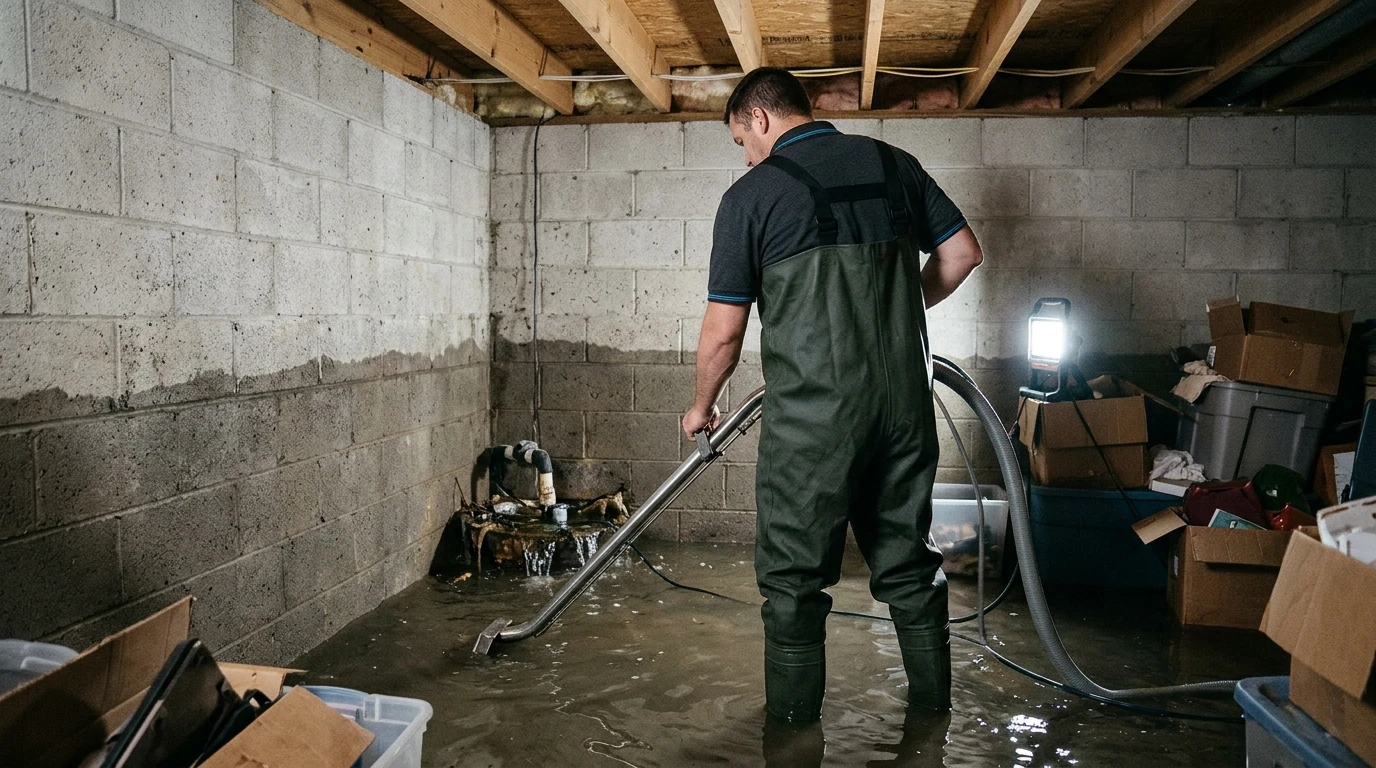
Maybe the sump pump died during a heavy rain and the pit backed up over the floor. Maybe the water heater in the corner is leaking from the bottom, or a supply line behind the washer let go overnight. Whatever the source, you’re standing in a Plum basement with water spreading toward the furnace and you need to know who picks up the phone first: a plumber, your insurance company, or a restoration crew. Here’s the short version, then the detail.
What Do I Do in the First 10 Minutes?
Stop the water if you can reach the shutoff safely, cut power to the basement circuit if water is anywhere near outlets or the electrical panel, and get anything you can lift off the floor. Everything after that waits for a professional.
If the source is a supply line or the washing machine hose, the shutoff valve is usually within a few feet of the fixture. If it’s a failed sump pump, don’t reach into the pit while standing in water, especially if the pump is still plugged in. A tripped GFCI outlet or a breaker that won’t reset is a sign the electrical system already got wet; leave it off and don’t touch it again until an electrician or your restoration crew clears it.
Don’t run a wet/dry vac on standing water that’s touching an outlet, and don’t walk through water if you can’t tell how deep it is around a floor drain or stairwell.
Do I Call a Plumber or a Restoration Company First?
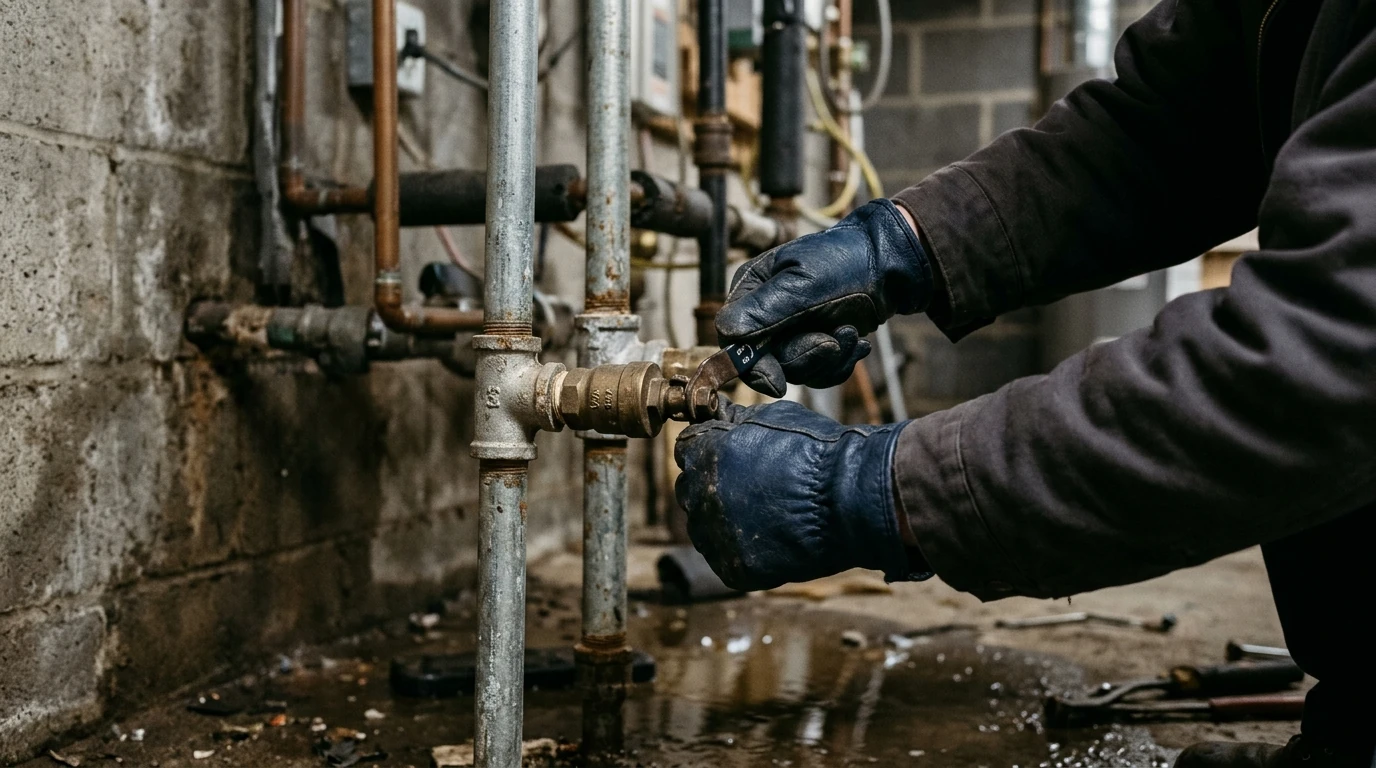
Call a plumber only when the failure itself is mechanical: a broken pipe fitting, a dead sump pump, or a leaking water heater tank. Call a restoration company for everything involving standing water, wet drywall, soaked insulation, and the insurance paperwork that follows.
These often overlap, and that’s normal. A few common scenarios in Plum basements:
- Sump pump failure. A plumber or electrician replaces the pump or fixes the float switch. The restoration crew extracts the water that already got out and dries the framing underneath before it warps or grows mold.
- Water heater leak. A plumber replaces or repairs the tank. A water heater flood cleanup crew pulls the water from the floor, checks for wicking into drywall and baseboards, and documents the loss for your claim.
- Burst pipe. A plumber fixes the pipe itself. For everything the water touched after it, see our burst pipe emergency checklist and bring in a water damage restoration crew for extraction and drying.
- Groundwater seeping through the foundation. This usually isn’t a plumbing problem at all. It calls for basement flooding cleanup and, longer term, a conversation about grading or a sump system.
In most cases you’re coordinating two calls, not choosing one. A restoration crew can often tell you over the phone which situation you’re in.
What Happens When You Call a 24/7 Restoration Crew?
The first call is mostly information gathering: your address, what caused the water, roughly how long it’s been sitting, and whether the source is stopped. That lets the crew bring the right equipment the first time.
Have the following ready if you can: the approximate time the flooding started, whether the water came from inside the home (a pipe, appliance, or pump) or from outside (rain, groundwater, a storm drain backing up), and any photos you’ve already taken.
On arrival, a water damage crew typically maps moisture with a meter and thermal imaging, extracts standing water, and sets containment if porous materials need to come out. Drying follows the ANSI/IICRC S500 standard for professional water damage restoration, which is the industry reference for how fast, how dry, and how long equipment should run. They’ll also photograph the damage as it’s found, which matters for your claim.
What Should I Do Before the Crew Arrives?
Document the damage, move what you can save, and resist the urge to start cleanup chemicals on your own. Photos and a clear timeline protect your claim more than anything else you can do in the first hour.
- Take wide and close-up photos of the water line, affected walls, and any damaged belongings before you move them.
- Move boxes, furniture, and electronics off the wet floor and onto dry ground upstairs if you can do it safely.
- Don’t run fans or a dehumidifier yet if sewage or gray water is involved; that can spread contamination instead of drying it.
- Keep any receipts for a hotel stay, a wet/dry vac rental, or emergency supplies; most policies reimburse reasonable mitigation costs.
- Skip bleach or store-bought mold spray on wet drywall. It doesn’t reach what’s inside the wall cavity and can mask a problem a moisture meter would otherwise catch.
For a fuller walkthrough of the first day, see what to do in the first 24 hours after water damage.
Once the source is off and the obvious hazards are handled, the fastest way to limit damage in a Plum basement is getting extraction and drying started within hours, not days. If water is actively spreading right now, call now at (412) 413-9234; the line runs 24/7.
About Only Dry
Only Dry is based in Plum, PA and answers calls 24/7 for water damage, mold, fire, and smoke restoration across the Plum, Monroeville, and Murrysville area. This post was prepared with input from Michael Katofsky, drawing on the company’s day-to-day work drying out basements across the region.