TL;DR: In Plum, PA, repairing a water-damaged ceiling typically costs $150 for a small paint-only touch-up up to $5,000 or more when insulation, framing, and drywall all need to come out. A single stain caught early and dried properly often just needs repainting. A ceiling that’s been wet more than 48 hours, is sagging, or feels soft usually needs to be cut out and replaced to rule out hidden mold.
If you walked into a room in your Plum home and found a brown ring spreading across the ceiling under an upstairs bathroom or a second-floor laundry closet, you’re probably asking two things: how bad is this, and what’s it going to cost to fix? The honest answer depends on something you can’t see yet, how much water got into the ceiling cavity before anyone noticed, and for how long.
How much does ceiling water damage repair cost in Plum, PA?
Ceiling water damage repair in the Plum area typically costs between $350 and $3,000, depending on whether the fix is cosmetic (drying and repainting) or structural (cutting out drywall, pulling wet insulation, and rebuilding). Most single-leak stains from an upstairs bathroom or a failed supply line land in the $350 to $800 range.
| Scenario | Typical cost range |
|---|---|
| Small stain, paint-only touch-up (ceiling already dry) | $150 - $400 |
| Patch and repaint, drywall structure still intact | $350 - $800 |
| Cut out and replace a damaged drywall section (2-4 sq ft) | $600 - $1,500 |
| Full ceiling drywall replacement, single room | $1,200 - $3,000 |
| Ceiling with wet insulation and exposed framing, structural drying | $2,000 - $5,000 |
| Ceiling damage with mold growth requiring remediation | $2,500 - $6,500+ |
These are typical industry ranges for the Pittsburgh-area market, not a quote. Every ceiling, every leak, and every house in Plum, Oakmont, or Monroeville is a little different, so ask for a written scope of work broken down by material and labor before anyone starts cutting into drywall.
What makes a ceiling repair cost more or less?
Four things move the number the most: how much of the ceiling got wet, whether the insulation above it needs replacing, how long the area stayed wet before anyone caught it, and whether mold shows up once the drywall comes down.
- Size of the affected area. A 1-foot stain is a patch job. A ceiling that’s sagging across most of a room is a tear-out.
- What’s above the drywall. Wet batt insulation almost always has to be removed, not dried, which adds labor and material cost.
- Ceiling type. Textured or plaster ceilings, and vaulted ceilings that need scaffolding, cost more to match and repair than a flat drywall ceiling in a standard room.
- Water category. Clean water from a supply line dries and repairs differently than water that’s been sitting, or water from a contaminated source, which may require more aggressive material removal and sanitizing.
- Mold. If drywall or insulation has been wet long enough to grow mold, remediation gets added to the repair cost, often the biggest swing factor on this list.
Will insurance cover a water damaged ceiling in Plum?
Most Pennsylvania homeowners policies cover ceiling damage from a sudden, accidental event, like a supply line that bursts or a washing machine hose that fails overnight, according to the Insurance Information Institute. They typically exclude damage caused by a slow, long-term leak or ordinary roof wear and tear.
That distinction matters for a ceiling claim specifically, because ceiling stains often come from leaks that have been dripping quietly for weeks before anyone notices the ring on the paint. An adjuster will usually ask when the leak started and how it was discovered. Photograph the damage as soon as you find it, keep any plumber or roofer’s invoice, and get water flow stopped quickly; prompt mitigation protects the claim. For more on what a standard policy covers in Pennsylvania, see our plain-English guide to homeowners insurance and water damage.
Drying vs. replacing: how do you know which one you need?
A ceiling can usually be dried and saved if the leak was caught within 24 to 48 hours, the sag is minor, and moisture readings are dropping day over day. Past that window, or with visible sagging, a soft spot, or a musty smell, the drywall and any wet insulation typically need to come out.
The process a water damage restoration crew follows is fairly standard, laid out in the ANSI/IICRC S500 standard for water damage restoration:
- Stop the source. Nothing else matters until the water is off, whether that’s a supply valve, a roof tarp, or a shut appliance line.
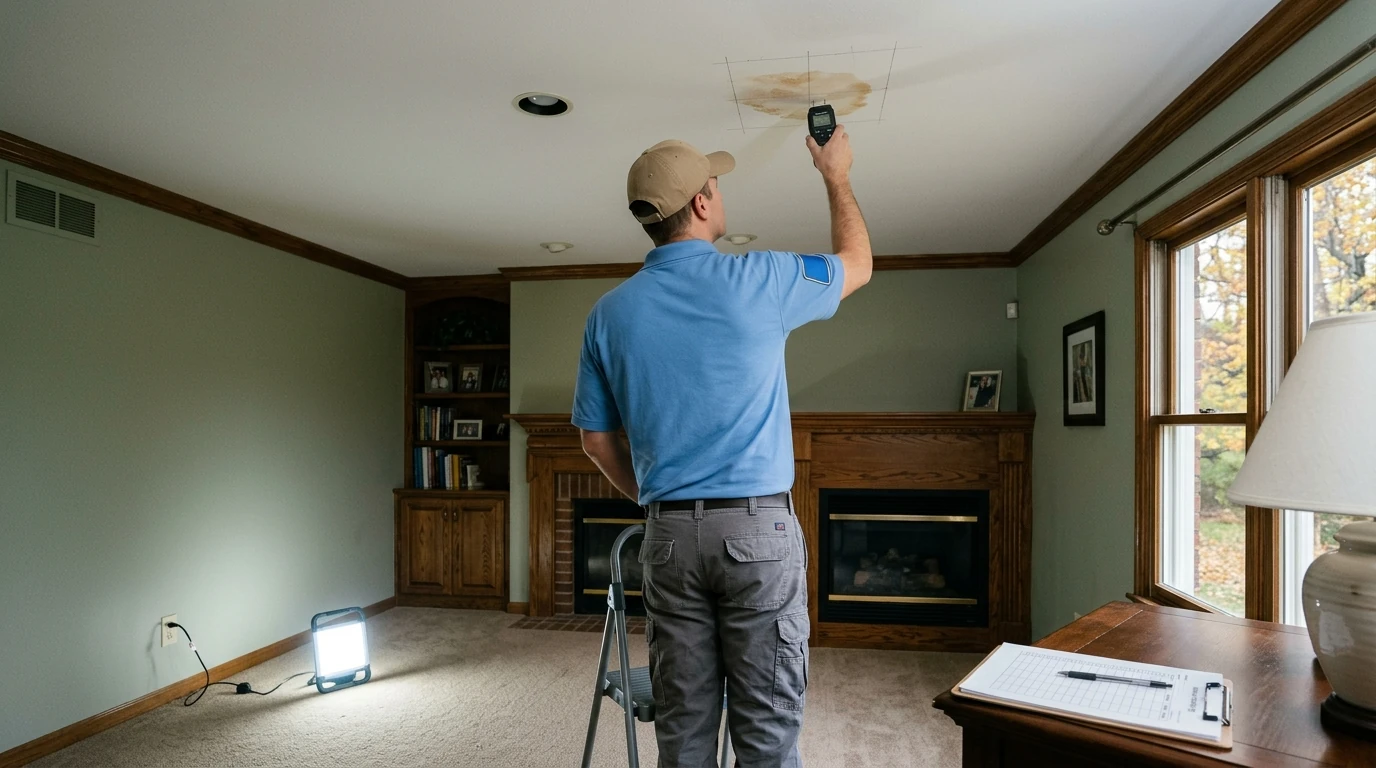
- Check above the ceiling. A moisture meter and sometimes a small inspection hole confirm how far the water traveled and whether insulation is wet.
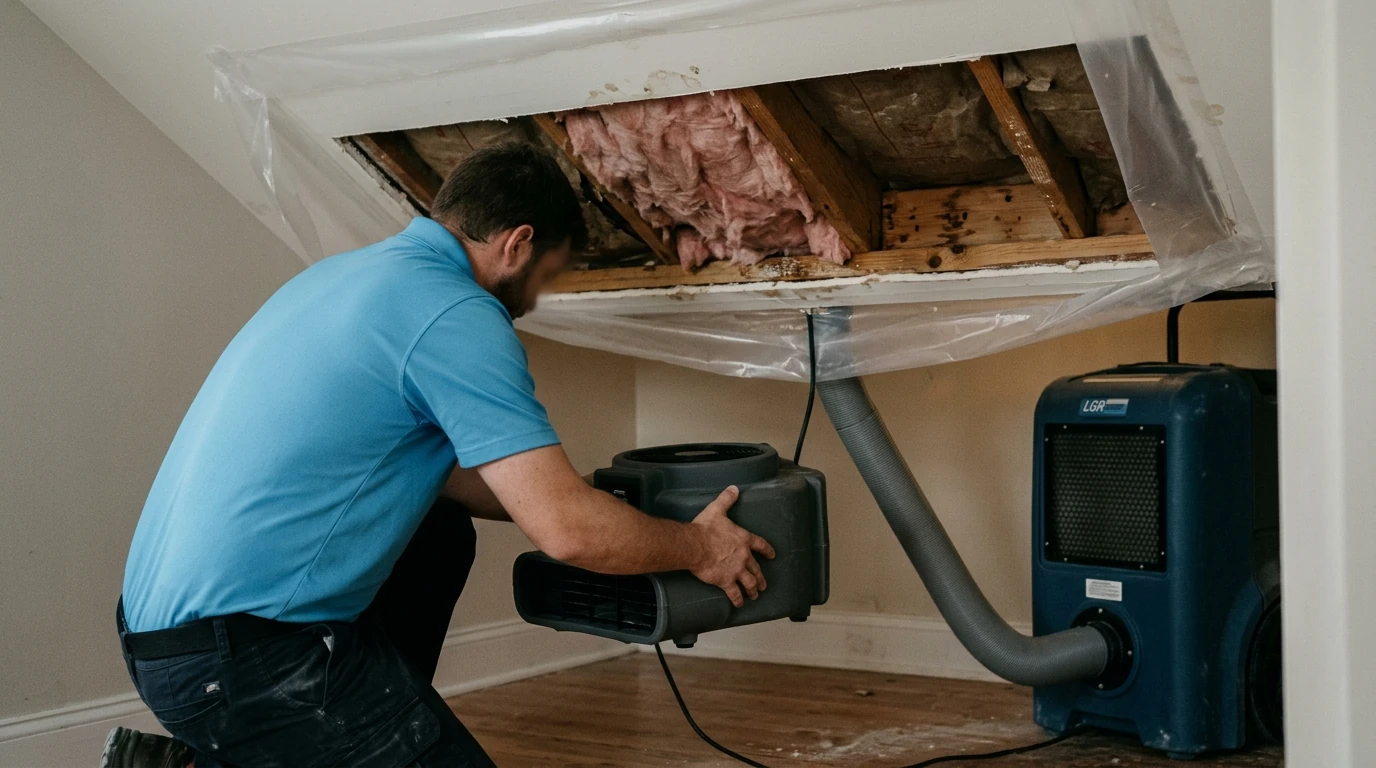
- Contain and extract. Plastic sheeting protects the room below while any standing water is removed.
- Dry or remove. Air movers and a dehumidifier dry the cavity in place when the damage is caught early; wet insulation and compromised drywall get cut out and bagged when it’s not.
- Monitor to dry standard. Readings are tracked daily until the materials hit a dry benchmark, not just a quick once-over.
- Patch, texture-match, and repaint, or rebuild the section if drywall was removed.
What should you do first, and who handles the repair?
If water is actively coming through the ceiling right now, the first call depends on the source: a plumber for an active supply line or fixture failure, a roofer if it’s coming from above the attic. Once the source is stopped, a restoration company takes over the drying, moisture mapping, and repair side.
In Plum, a water leak detection check can confirm the actual source before anyone opens drywall, which saves time and unnecessary cutting. If the leak has already stopped and you just need the ceiling assessed and dried, call Only Dry at (412) 413-9234 to schedule a same-day moisture assessment, or ask about ceiling water damage repair directly.
A quick moisture check costs far less than guessing wrong, patching over wet insulation, and finding the same stain back in six weeks.
About Only Dry
The company is locally owned and operated and serves Plum, PA and nearby communities including Oakmont, Monroeville, Murrysville, and Fox Chapel from its base near Boyce Park. It provides water damage restoration, mold remediation, fire damage restoration, and smoke damage restoration, with 24/7 availability for active leaks and ceiling emergencies. Michael Katofsky heads the team, which documents moisture readings and provides a written scope before any drywall comes down.